




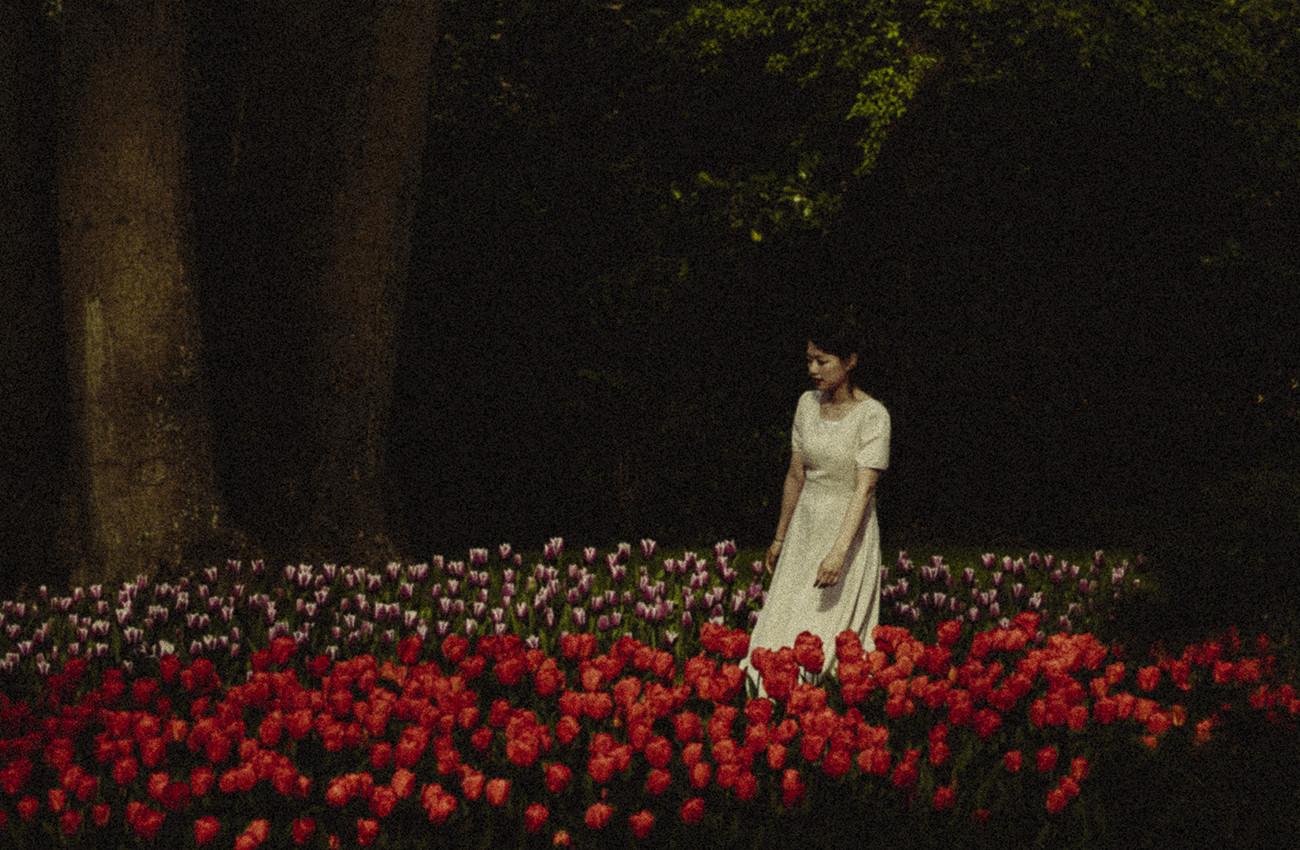
Éditions de Juillet have simply printed Stéphane Mahé‘s e-book, Temper.
Alexandra Palka despatched us this textual content.
“Pictures,” mentioned Chris Marker in 1966, “is the intuition of the hunt with out the need to kill. It’s the hunt of angels…We stalk, we goal, we shoot and Clack! As an alternative of a lifeless individual, we make an everlasting one.” However earlier than blooming into eternity, the well-known “field of melancholy” should endure the lightning of the second fringed with actuality. So, too typically, we depend on comfy commonplaces: the photographer “seizes”, “captures”, “tames” actuality. This ignores the formidable “fictional” pressure of the picture in that it permits the artist to deploy a misplaced world bursting with life, populated by fantastical apparitions. Thus, turning into the lover of lightning, embracing the second, uniting with the sudden and wandering actuality doesn’t imply renouncing the incredible, the story, the parable which recommend greater than they present.
The confederate of shadows that’s the nocturnal photographer within the ardor of the second collapses actuality in sections, undermined by the tumultuous swell of the grain, swallowed up by the twilight vivacity of the colours. What stays is a precipitate of feelings which hits the creativeness, the large bang of fiction which flows by means of each pore of the picture all through a “pictorial highway film”. It’s this delicate train that photographer Stéphane Mahé undertakes in his new publication “MOOD” by giving us his works as if gathered within the folds of a dream to type a poetic distractions, composed in accordance with his wanderings, alone able to filling the abyss of our fears within the face of the dizziness of the invisible. He deploys a dreamlike fable on the sting of magical realism the place humanity runs to the moon, its head dressed within the whims of Orpheus, to succumb to the exuberance of the senses and chortle at its unreason.
Behind these elegies which frolic behind the eyelids of the evening, the thoughts of the viewer wearing melancholy units off on a whirling stroll carried away by the chromatic variations and the evocative pressure of the luminous results catching a fleeting daybreak, the thriller of a road twisted in darkness, a silhouette unexpectedly lower out within the flame of the second, a facade exalted by a want for eternity, a sq. iridescent with gold misplaced within the intoxication of its solitude, a seaside home haunted by childhood reminiscences, a wolf in majesty coming to inform us that fairy tales typically finish badly…In The Fall of the Home of Usher, Edgar Allan Poe, writes: “I felt that I breathed an environment of sorrow”. An air of harsh, deep, incurable melancholy hovered over all the things and penetrated all the things. And but, the attention danced joyfully on the sting of the abyss. By blurring the fabric, stripping away the current, Stéphane Mahé sketches a metaphysical charade, as if projected by a magic lantern, bringing out all of the romantic pressure of actuality born from the alchemy particular to images which is predicated on the fixed confrontation between creativeness and statement. And it’s merely life that spills out over the velvet of a blue sky lit with electrical neon lights, panting lanterns. The poet and author Yvon Le Males makes no mistake when he discusses the work of the photographer: “It’s the evening that makes the sunshine / when unfold like water on the plain / within the gaze it “It’s the evening that makes the dream / when it wakes us from a nightmare with a dream”. As if the photographer was taking up the Nocturnes dotted with gold composed by the painter Whistler.
A reference to the work of photographer Harry Gruyaert additionally emerges. The work of the latter – which buildings his pictures based mostly on coloration – can be delicate to cinematographic results: use of pure mild, sturdy shadows, uncommon framing (false perspective), angles of view generally bordering on the believable ( synthetic framing by means of a window or store window, and so on.), fastened pictures, and so on. “Colour is a means of sculpting what I see. Colour doesn’t illustrate a topic or the scene I {photograph}, it’s a worth in itself. It’s even the emotion of images,” he explains. He adopts a affected person perspective so as to push the set off in the meanwhile when mild and coloration reveal their energy and subtlety. Moreover, identical to Stéphane Mahé, Harry Gruyaert – a part of whose work is rooted within the frost of the North Sea – provides that there is no such thing as a staging in his work, the photographer ready to ‘to be stunned by the great thing about a panorama or a scenario. In a confidential tone, he notes: “I generally say to myself that it will be a lot less complicated to stage my photographs, to repaint a sure wall like Antonioni, or to ask a sure character to decorate otherwise. However I consider that I’ll lose this instantaneous miracle of the sudden which takes the breath away, of this very bodily phenomenon of the picture which instantly registers.” In doing so, these two photographers belief the creativeness of the viewer to carry the picture to life. Clearly, photographers are these mild eaters who made Icarus’ dream. It stays for the viewer to return and comply with within the footsteps of Prometheus to steal the burning hearth of the second.
Alexandra Palka
E-book: “MOOD” (Éditions de Juillet, 92 pages) by Stéphane Mahé (pictures and textual content) and Yvon Le Males (poems). Photographer Stéphane Mahé is introduced by Galerie L’Entrée des Artistes.
